
When it comes to vision correction surgery, two popular options often come to mind: PRK and LASIK. Both procedures aim to improve vision and reduce dependence on glasses or contact lenses, but they have distinct differences. Let’s explore these two laser eye surgeries to help you understand which might be the best choice for your vision needs.
Understanding PRK and LASIK
PRK (Photorefractive Keratectomy) and LASIK (Laser-Assisted In Situ Keratomileusis) are both laser eye surgeries designed to correct refractive errors such as nearsightedness, farsightedness, and astigmatism. While they share the same goal, their approaches differ significantly.
What is PRK?
PRK is a type of laser eye surgery used to correct vision issues like nearsightedness, farsightedness, and astigmatism. During the procedure, the eye surgeon removes the outer layer of the cornea, called the epithelium, and then reshapes the underlying corneal tissue with a laser to improve the eye’s focus.
Unlike LASIK, PRK doesn’t involve creating a corneal flap, making it a suitable option for people with thinner corneas or those with certain lifestyle needs where flap-related complications may be a concern.
What is LASIK?
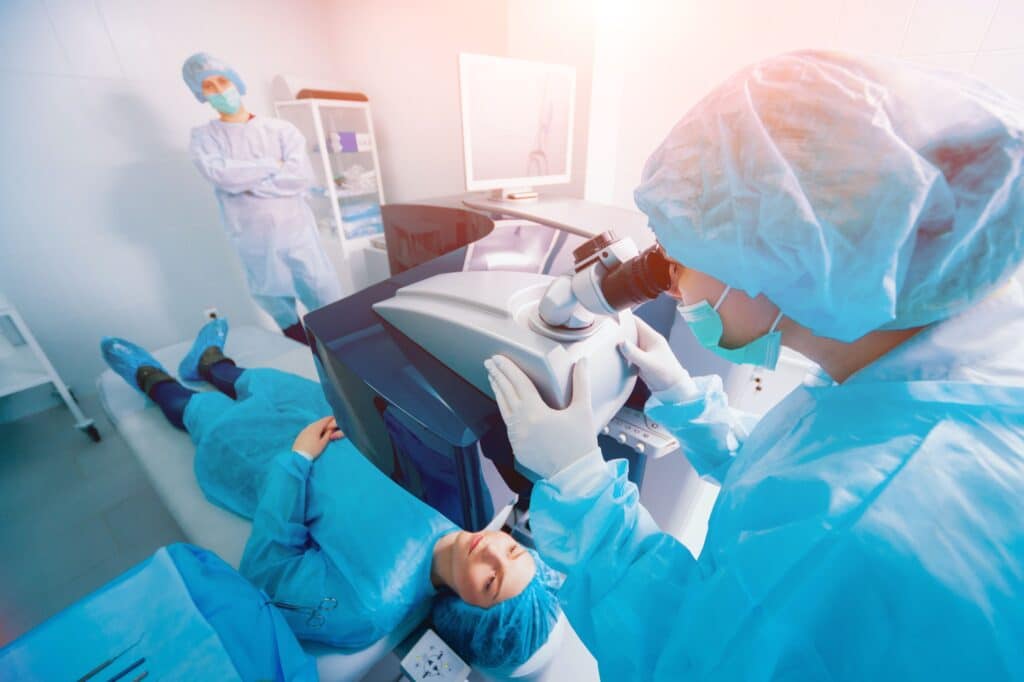
LASIK is a popular form of laser eye surgery used to correct vision problems such as nearsightedness, farsightedness, and astigmatism. In this procedure, an eye surgeon creates a thin flap in the cornea using a laser or a small blade, lifts the flap, and then reshapes the corneal tissue beneath with a specialized laser. This reshaping helps improve the eye’s ability to focus light accurately onto the retina, resulting in clearer vision. After the laser reshaping, the corneal flap is repositioned, where it naturally adheres without the need for stitches.
Key Differences Between PRK and LASIK
While both procedures can effectively correct vision, there are several important distinctions:
1. Corneal Tissue Preservation
– PRK: Removes the entire epithelial layer
– LASIK: Creates a corneal flap, preserving more tissue
2. Recovery Time
– PRK: Slower recovery, typically 1-4 weeks
– LASIK: Faster recovery, often within 24-48 hours
3. Initial Discomfort
– PRK: May cause more discomfort in the first few days
– LASIK: Generally less discomfort immediately after surgery
4. Risk of Complications
– PRK: Lower risk of flap-related complications
– LASIK: Potential for flap-related issues, though rare
5. Candidacy
– PRK: Suitable for those with thin corneas or certain eye conditions
– LASIK: Ideal for those with adequate corneal thickness
Choosing Between PRK and LASIK
The decision between PRK and LASIK depends on various factors, including:
– Your corneal thickness
– Your overall eye health
– Your lifestyle and occupation
– Your recovery time preferences
A comprehensive eye exam and consultation with an experienced eye professional at Campus Eye Group is crucial to determining which procedure is best suited for you.
The LASIK Advantage at Campus Eye Group
At Campus Eye Group, we specialize in LASIK surgery, offering state-of-the-art technology and expert care. Our LASIK procedure provides numerous benefits:
– Quick procedure, taking only about 5 minutes per eye
– Immediate results for most patients
– Minimal discomfort during and after the surgery
– High success rate in achieving 20/20 vision or better
We use advanced Z-LASIK technology, also known as “bladeless LASIK,” which creates an ultra-thin corneal flap using a precise femtosecond laser beam. This modern approach ensures consistent, proven results with enhanced safety.
Is LASIK Right for You?
To be considered for LASIK, you should:
– Be at least 18 years old
– Have healthy eyes
– Have adequate corneal thickness
It’s important to note that certain conditions, such as chronic dry eye or corneal diseases, may affect your eligibility for LASIK surgery.
Take the Next Step Towards Clear Vision
If you’re considering laser eye surgery, now is the time to explore your options. At Campus Eye Group, we’re committed to helping you achieve your best possible vision. Our experienced team will guide you through the process, from initial consultation to post-operative care.
Schedule a consultation with Campus Eye Group today to find out if LASIK is the right choice for you. Our “20/20 or free” commitment ensures your satisfaction, offering a full refund if your vision after LASIK isn’t comparable to your best-corrected vision with glasses or contacts.